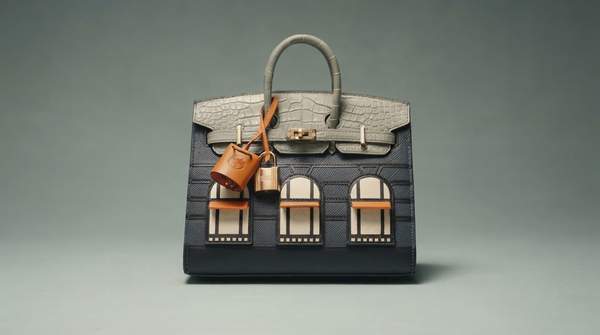
For collectors navigating the exclusive world of Hermès Birkin bags, understanding the factors that drive their secondary market value is crucial for making informed buying and selling decisions. While the primary market for Birkins is characterized by extreme scarcity and limited access, the secondary market offers a dynamic environment where specific attributes significantly influence a bag's price. Key characteristics such as leather type, size, color, condition, rarity, and production period collectively determine a Birkin's market appeal and its potential to command premium prices, often reflected in record-breaking auction sales.
Understanding the Hermès Birkin Secondary Market
The Hermès Birkin bag stands as one of the most valuable luxury accessories globally, with Sotheby's reporting nearly $100 million in Birkin sales since 2021, underscoring immense collector demand. The brand's strict control over production and distribution means only a limited number of Birkins are allocated to boutiques annually, making direct purchases challenging and often requiring a prior purchase history with Hermès. This artificial scarcity, as noted by Rebag, fuels a robust secondary market where buyers seek specific styles and colors that are rarely available directly from the brand.
In this secondary market, a Birkin's resale value is determined by a combination of factors including its condition, size, leather type, color, hardware, and overall rarity, according to Sotheby's. Unlike the opaque primary market, the secondary market offers price transparency, allowing collectors to evaluate bags based on these attributes, along with provenance and market demand, which helps establish confidence and value, as explained by Madison Avenue Couture.
Primary Characteristics Driving Value: Leather, Size, and Color
Several fundamental characteristics play a significant role in determining a Birkin bag's secondary market value:
-
Leather Type: The material of a Birkin is a primary value driver. While classic leathers like Togo, Clemence, and Epsom are popular, exotic leathers such as crocodile and alligator, especially those with diamond hardware, command substantial premiums. Rebag highlights that exotic materials are key contributors to the highest market values. Sotheby's also notes that the specific leather can influence how a color is perceived and valued.
-
Size: Certain sizes are more sought after in the secondary market. Sotheby's indicates that smaller sizes, particularly the Birkin 25 and 30, tend to sell faster and achieve higher prices. For context, in 2026, U.S. retail prices for a Birkin 25 are approximately $13,500, a Birkin 30 is $14,900, and a Birkin 35 is $16,300, though secondary market prices can differ considerably.
-
Color: Classic neutral colors like Black, Gold, and Étoupe consistently attract strong demand. However, lighter neutrals, pastels, and highly sought-after seasonal shades can also achieve strong prices. Sotheby's emphasizes that color alone does not dictate value; its desirability often increases when paired with a specific leather, size, or hardware. For instance, a rare seasonal color in a desirable leather can fetch a premium.