In Milan, the Bosco Verticale towers stand as a testament to urban nature, featuring over 900 trees and 20,000 plants. These structures, designed by Stefano Boeri, reduce noise pollution by 30% and produce 1,600 tons of oxygen annually, according to Hart Design Selection. Such integration of living ecosystems redefines high-rise luxury, establishing high-performance environmental solutions as a benchmark for elite property valuation.
Luxury homes once prioritized extravagant, man-made features and opulent materials. Yet, the most coveted properties now integrate natural elements, offering measurable health and investment benefits. The integration of natural elements challenges traditional notions of high-end design; while pure extravagance once defined luxury, the innate human connection to nature is now paramount in property development.
As awareness of well-being and sustainable living grows, biophilic design will likely become a standard expectation, rather than a niche feature, in the high-end real estate market.
Beyond Green Walls: Defining Biophilic Luxury
Biophilic design transcends mere plant arrangements, aiming for a deep, architectural integration of nature. This method employs organic aesthetics, fluid curves, and complex geometric forms that mimic natural fractals, moving away from rigid lines, according to Hart Design Selection. Water features, from wall cascades to interior pools, serve as central decorative elements, offering both visual appeal and ambient sound. The biophilic design philosophy mirrors nature's inherent beauty and complexity, fostering a profound connection that actively counters urban stressors. The implication is clear: luxury is no longer about isolating oneself from the environment, but rather about creating immersive, restorative sanctuaries that enhance occupant well-being at a fundamental level.
The Science of Serenity: How Nature Nurtures Well-being
Scientific evidence confirms that exposure to natural elements—plants, light, and water—reduces stress and improves well-being, as detailed by The Berkeley Palm Beach. Scientific evidence confirms that exposure to natural elements underpins biophilic design's ability to transform interiors into sanctuaries that replenish body and mind, a point echoed by Maison Blanc Design. The integration of natural elements is not merely decorative; it is a deliberate strategy leveraging proven psychological and physiological benefits. Luxury homeowners are thus investing in measurable health outcomes and environmental contributions, not just status. Luxury homeowners investing in measurable health outcomes and environmental contributions marks a profound re-evaluation of luxury, where health and environmental sustainability hold increasing value, even at the highest income brackets.
Luxury Estates Embracing the Outdoors
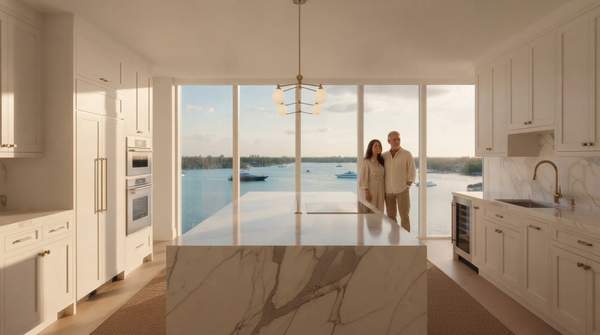
Multi-million dollar listings increasingly highlight natural surroundings and expansive views. The increasing highlight of natural surroundings and expansive views in multi-million dollar listings is evident in properties like Lee Pond Estate in Westwood, MA, listed for $12,500,000, and Deerwood estate in Stowe, VT, at $14,950,000, both noted by LandVest. Tranquility estate in Bar Harbor, ME, at $11,200,000, further exemplifies this. While specific biophilic features are not always explicitly detailed in these listings, their high valuations implicitly reflect the market's appreciation for natural integration. Their high valuations implicitly reflecting the market's appreciation for natural integration suggests a critical juncture: either these properties are behind the curve in articulating their biophilic value, or the market already assigns a premium to unstated natural integration. The luxury market is clearly redefining its criteria, prioritizing nature as a core component of value.
A Smart Investment in Health and Wealth
Properties with integrated biophilic features are now considered smarter investments, driven by tangible benefits, according to The Berkeley Palm Beach. Beyond personal well-being, biophilic design adds a quantifiable layer of investment security and market desirability. Biophilic design adding a quantifiable layer of investment security and market desirability marks a fundamental re-evaluation of luxury, moving beyond superficial opulence to embrace functional, health-centric living. Luxury developers who fail to integrate high-impact biophilic features risk missing a critical opportunity to differentiate properties and command premium valuations in this evolving market. The aesthetic appeal of biophilic design is now secondary; its quantifiable environmental and health benefits drive investment decisions.
Common Questions About Biophilic Luxury
What distinguishes biophilic design from simply adding plants to a room?
Biophilic design represents a comprehensive architectural and interior strategy. It integrates natural patterns, light, air, and water elements throughout a space, far exceeding mere potted plants. This includes natural ventilation, optimized daylighting, and materials reflecting natural textures and forms, often incorporating complex fractals and fluid curves in structural elements. The goal is an immersive, restorative environment.
How does biophilic design enhance property value in the luxury market?
Biophilic design enhances property value by offering scientifically-backed health benefits, appealing to discerning buyers who prioritize well-being and stress reduction. Properties designed with these principles are perceived as 'smarter investments' due to their ability to create essential sanctuaries. Such homes command a premium in the high-end market, differentiating themselves by offering measurable improvements in occupant quality of life.
Are there specific maintenance considerations for biophilic luxury homes?
Integrating living elements, such as extensive vertical gardens or interior water features, necessitates specialized maintenance plans. These plans ensure plant health, proper functioning of water systems, and optimal air quality. Developers frequently incorporate automated systems for irrigation and climate control, simplifying upkeep for homeowners and ensuring the longevity and vitality of these natural elements.
By 2026, if current trends persist, developers globally, inspired by projects like Milan's Bosco Verticale, and will likely have established biophilic integration as a standard in luxury real estate, transforming homes into essential sanctuaries that replenish body and mind and command premium valuations.