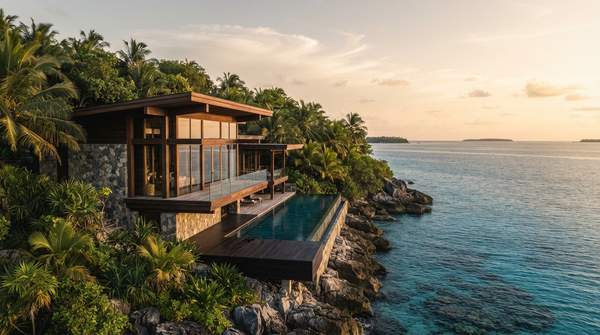
A luxury residence in Malibu recently achieved net-zero energy status, seamlessly integrating solar panels and advanced insulation while maintaining its opulent aesthetic, according to Dwell Magazine. This feat proves sustainability enhances high-end design, disproving the myth that luxury demands resource-intensive practices. While luxury homes historically relied on resource-intensive materials, a new wave of design now achieves opulence through eco-conscious choices. This redefines the market: as consumer awareness and material innovation grow, sustainable luxury will become the standard for high-end properties, driving significant shifts in construction and interior design.
Beyond Green Paint: Defining Sustainable Luxury Materials
High-end designers now source materials like mushroom-based insulation and algae-derived paints, according to Architectural Digest. Such innovations transcend mere eco-friendly gestures, embracing high-performance materials. Bamboo flooring, a rapidly renewable resource, withstands more impact than traditional oak, according to the Sustainable Flooring Institute, offering durability alongside its environmental credentials.
Reclaimed wood saves up to 12 trees per average luxury home, according to the Forest Stewardship Council, significantly reducing deforestation. The "circular economy" in luxury design emphasizes materials reusable or recyclable at end-of-life, as noted by the Ellen MacArthur Foundation. This holistic lifecycle thinking positions sustainable luxury as a forward-thinking investment, ensuring enduring value beyond initial appeal.
The Science of Opulence: How Innovation Drives Eco-Conscious Design
Smart home systems integrated with sustainable design can reduce energy consumption by up to 50%, according to the Energy Efficiency Agency. Such technologies deliver measurable performance. LEED Platinum certified homes often see utility bill savings of 30-60% annually, according to the U.S. Green Building Council, validating their efficiency.
Advanced geothermal heating and cooling systems cut HVAC costs by 25-70%, as reported by the Department of Energy, offering substantial long-term savings. Certification programs like WELL Building Standard focus on human health and well-being, attracting luxury buyers, according to the WELL Building Institute. These rigorous certifications underscore that sustainable luxury is defined by measurable performance and occupant well-being, not just environmental impact.
More Than Aesthetics: The Tangible Benefits of Sustainable Luxury
Homes built with sustainable materials command a 10-20% higher resale value, according to the Green Building Council Report. This offers a clear financial advantage. Air quality inside green homes is typically 2-5 times better than conventional homes due to low-VOC materials and improved ventilation, according to the World Health Organization, enhancing occupant health.
Biophilic design, incorporating natural elements, reduces stress and improves cognitive function in residents, according to the Environmental Psychology Journal. The average lifespan of a sustainably built luxury home can exceed 100 years, compared to 50-70 for conventional builds, according to the Building Science Corporation. Ultimately, sustainable luxury offers a compelling long-term value proposition, extending beyond environmental impact to encompass enhanced property value, superior occupant health, and enduring structural integrity.
The Future of Opulence: A New Standard for High-End Living
The global market for green building materials was projected to reach $600 billion by 2025, according to Grand View Research. This growth confirms a clear market demand. The demand for ethically sourced and transparently produced materials is a top priority for 70% of high-net-worth individuals building new homes, according to the Knight Frank Wealth Report. The demand for ethically sourced and transparently produced materials reflects a profound shift in consumer values.
A survey found 85% of luxury homeowners would pay a premium for homes with demonstrable environmental benefits, according to Sotheby's International Realty. Some luxury developers offer "carbon-neutral" homes, offsetting remaining emissions through certified programs, according to the Eco-Luxury Development Group. The market signals that true luxury now means intelligent, sustainable design, offering both prestige and performance, rather than conspicuous consumption.
Investors pouring capital into traditional, resource-intensive luxury properties risk depreciating assets as opulence irrevocably shifts towards sustainability. By 2026, the construction sector will likely see a significant increase in specialized firms focusing exclusively on sustainable luxury development, driven by this evolving consumer preference.