The 2026 Lexus ES luxury sedan, a benchmark in its class, will offer an EV powertrain for only a small premium over its gasoline counterpart. The 2026 Lexus ES luxury sedan, offering an EV powertrain for only a small premium over its gasoline counterpart, profoundly recalibrates how premium features are priced, making advanced electric vehicle technology significantly more accessible.
Luxury brands have long commanded significant premiums for advanced features and exclusivity. Yet, they now offer cutting-edge technology like EV power for only a marginal additional cost, introducing market pressure on traditional premium pricing strategies.
Luxury brands will increasingly compete on value and accessible innovation rather than pure exclusivity. This appears likely to democratize premium features but also challenges their traditional high-margin business model.
Lexus's pricing strategy for the 2026 ES luxury sedan, offering an EV powertrain for a small premium, shifts towards market penetration over extreme exclusivity for new technologies, according to a Lexus Product Announcement. This strategy aligns with several converging market forces: analysts project luxury EV production costs will reach near-parity with ICE equivalents by 2028, as reported by Bloomberg Intelligence. Concurrently, 65% of affluent consumers prioritize sustainable options and advanced technology over brand heritage, according to the Deloitte Global Automotive Consumer Study. The entry-level luxury sedan market has also intensified, with a 15% increase in competition from non-traditional premium brands over the last five years, states an S&P Global Mobility Report. These factors collectively compel luxury brands to prioritize broader appeal, recognizing that the landscape for premium pricing has fundamentally changed.
The Erosion of Exclusivity: Why Luxury Premiums are Shrinking
Direct-to-consumer EV brands like Tesla and Rivian have demonstrated that premium experiences can be delivered without traditional dealership markups, capturing significant market share, according to Cox Automotive Data. Concurrently, mainstream automotive brands now routinely offer advanced driver-assistance systems and high-quality interior materials once exclusive to luxury vehicles, as shown by the J.D. Power Initial Quality Study. Millennial and Gen Z luxury buyers are 30% more likely to research value and long-term cost of ownership than previous generations, states a Bain & Company Luxury Study. These evolving consumer preferences, coupled with advances in modular platform design and battery technology, have reduced the incremental cost of adding EV powertrains to existing luxury vehicle architectures, according to Automotive News. These evolving consumer preferences, coupled with advances in modular platform design and battery technology, have reduced the incremental cost of adding EV powertrains to existing luxury vehicle architectures, making it increasingly difficult for luxury brands to justify past exorbitant price gaps, particularly for features rapidly becoming industry standards. The implication is a fundamental re-evaluation of what constitutes a 'premium' offering in a market where advanced technology is no longer a differentiator.
The Enduring Allure: Where Traditional Luxury Still Commands a Premium
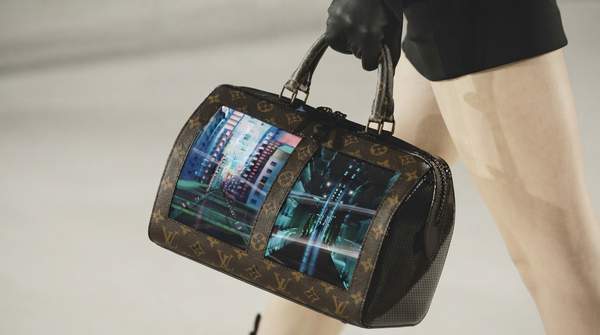
Despite the broader market shifts, traditional luxury retains its premium in specific niches. Bespoke customization programs, such as those offered by Rolls-Royce or Bentley, can add 50% or more to a vehicle's base price, with demand remaining strong, as detailed in the Rolls-Royce Annual Report. The ultra-luxury segment, defined by vehicles priced above $250,000, saw a 10% increase in average transaction prices last year, reports the KPMG Luxury Market Outlook. Limited-edition collaborations between luxury fashion houses and artists consistently sell out at high prices and maintain significant resale value, according to Artnet News. Experiential luxury, including private jet charters or exclusive resort stays, also sees price increases driven by demand for unparalleled service and privacy, states the Virtuoso Travel Trends Report. True ultra-luxury and bespoke experiences thrive by focusing on extreme scarcity, unparalleled personalization, and artisanal craftsmanship, justifying their elevated price points even as mass-market luxury democratizes. True ultra-luxury and bespoke experiences thrive by focusing on extreme scarcity, unparalleled personalization, and artisanal craftsmanship, justifying their elevated price points even as mass-market luxury democratizes, suggesting that while technology becomes accessible, the human element of unique creation and service remains an unassailable premium.
Redefining 'Premium': From Scarcity to Smart Innovation
The definition of 'premium' is evolving from mere scarcity to intelligent innovation. Luxury fashion brands now invest heavily in traceable supply chains and sustainable materials, marketing these efforts as a core premium offering, according to Vogue Business. Automotive luxury brands integrate advanced AI-driven infotainment systems and personalized digital assistants, positioning seamless technology as a key differentiator, as reported by the Mercedes-Benz MBUX Development Team. Some brands explore subscription models for features or exclusive access, shifting the premium from outright ownership to ongoing service, states BMW Financial Services. Emphasizing brand heritage and storytelling through immersive digital experiences also becomes crucial for connecting with consumers beyond product features, according to the LVMH Digital Innovation Report. The new premium is less about an inflated price tag and more about intelligent design, ethical production, seamless technological integration, and a compelling brand narrative that resonates with modern consumer values. The new premium is less about an inflated price tag and more about intelligent design, ethical production, seamless technological integration, and a compelling brand narrative that resonates with modern consumer values, implying that brands must innovate not just in product, but in their entire value proposition, to maintain relevance. For more, see our Premium Brands Explore Luxury's New.
By Q3 2026, luxury automotive brands, including Lexus, will likely need to have refined their EV pricing and feature packaging to compete effectively in this new landscape, balancing accessibility with their established brand prestige, or risk brand dilution as the market bifurcates into accessible and ultra-luxury segments.