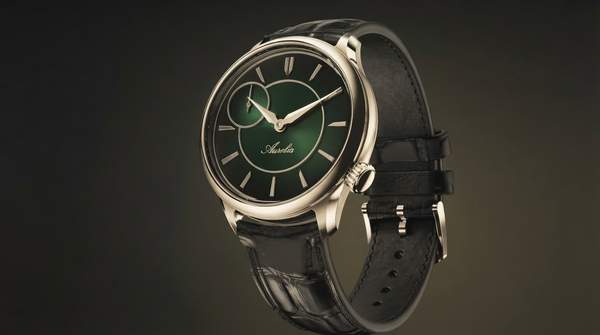
Commissioning a bespoke watch is, at its heart, a structured collaboration: an initial conversation about your vision, a design phase with sketches and renderings you approve, a crafting and assembly period, and a final round of quality checks before delivery. Independent watchmakers describe broadly similar sequences, though the details and durations vary from studio to studio. Understanding that general framework—synthesized here from the practices of several makers rather than any single brand—lets you walk into a first meeting knowing what will be asked of you and when.
The Journey to Your Unique Timepiece: Understanding Bespoke Watchmaking
Unlike large industrial brands, independent watchmakers often have the flexibility to create watches in collaboration with collectors, allowing smaller production, greater creative freedom, and direct dialogue between maker and client. Sartory-Billard, an independent maker of personalized mechanical watches, describes each project as beginning with a conversation that evolves into a unique watch designed around the client's ideas. Foksy, which publishes a timeline guide for its bespoke process, similarly frames the initial consultation as the first and most critical step, where a specialist meets the client to understand specific needs and preferences. The common thread across these accounts is that the client is not a passive buyer but a co-author of the piece.
Bespoke vs. Custom: Defining Your Level of Personalization
Not every "custom" watch is created from scratch, and the terminology matters. A fully bespoke commission starts from your concept: the dial's materials, textures, colors, and layout are explored to build a coherent visual identity that never existed before. At the other end of the spectrum sits what Bespoke Watch Projects, the California studio of John McConnico, calls its "Made-to-Order Editions"—limited production mechanical timepieces offered in small series, where each series allows a range of options so the watch becomes "a truly individualized timepiece" without being designed from a blank page. These definitions come from the watchmakers themselves, and industry usage varies slightly, so it is worth asking any artisan directly whether you are commissioning an original design or personalizing an existing model. The distinction determines how much creative control—and how much dialogue—you will have.
Phase 1: Initial Concept and Collaborative Vision
The process begins with understanding the client's vision, aesthetic preferences, and inspirations. Collectors often arrive with ideas, inspirations, or simply a desire to create something personal; from there, the project evolves through dialogue and design exploration. Your job at this stage is to articulate what the watch should mean: personal elements, stories, references, and the mood you want it to carry. The artisan's job is to translate that concept into a feasible project. Come prepared to describe inspirations in whatever form you have them—images, heirlooms, colors, even half-formed ideas—because this conversation sets the identity of everything that follows.
Phase 2: Design Development and Visualization
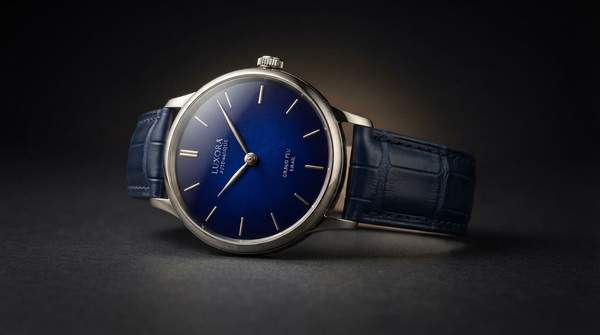
Once the concept is defined, ideas move onto paper and screen. Sketches and digital renderings allow the client to visualize the watch before production begins, and this is where the collaboration becomes concrete: you review the proposed dial layout, materials, and finishes, then approve or refine them. Sartory-Billard treats the dial as the centerpiece of the watch, exploring materials such as guilloché patterns, natural stone dials, mirror-polished titanium, and special finishes and colors. Manufacturers like OraTec-Swiss describe supporting clients from concept development through prototyping and part sourcing, which means the visualization phase is also when practical constraints surface—what can be machined, sourced, or finished as drawn. Expect iteration here; approval of the final rendering is the gate to production.
Phase 3: Crafting, Component Sourcing, and Assembly
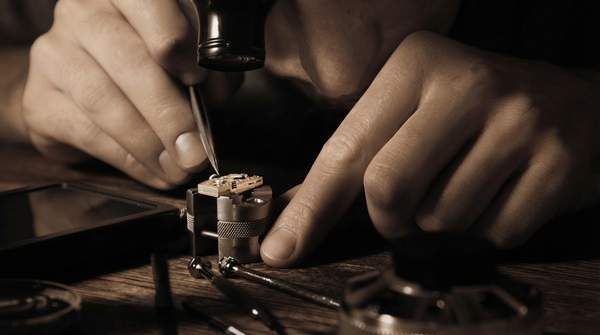
With the design finalized, the watch is manufactured and assembled with attention to detail. Depending on the maker, components may be handcrafted in-house or sourced through a global network of factories—American Watch Company, for instance, handcrafts most models in-house while drawing on international manufacturing partners. One concrete data point on duration: Scwarno, a China-based manufacturing facility, states that from start to finish it takes approximately 6-8 weeks to manufacture each watch, including sourcing raw materials, CNC machining components, assembly, and quality assurance testing, with technicians assembling each watch by hand. That figure applies to that facility's manufacturing phase only; Sartory-Billard notes its entire bespoke process typically takes several months, and full bespoke timelines vary by artisan.
Phase 4: Quality Assurance and Final Delivery
Before the watch reaches you, it passes through structured quality control. Scwarno describes inspecting all materials and components before production begins, performing checks at multiple stages during manufacturing, and conducting final multi-point inspections once the watch is assembled. Foksy's process guide likewise ends with approval, packaging, and delivery as distinct final steps. For the client, this phase is mostly hands-off, but it is worth confirming with your maker what inspections the finished piece will undergo and how it will be packaged and shipped—particularly for a one-of-a-kind piece that cannot simply be replaced from stock.
Bespoke Watch Commissioning Timeline
The table below sequences the stages described by multiple artisans into a single chronological framework, showing what happens at each phase and where your input is required. It is a synthesis of common stages, not a universal standard—individual makers may merge, reorder, or expand these steps.
| Phase | Key Activities & Client Decisions | Client Involvement |
|---|---|---|
| Initial Consultation | Discuss your vision, aesthetic preferences, inspirations, and desired personal elements; the artisan assesses feasibility. | High — you define the story and core identity of the piece. |
| Design & Visualization | Sketches and digital renderings are produced; dial materials, textures, colors, and layout are explored and refined. | High — you review, request changes, and approve the final design. |
| Crafting & Assembly | Materials and components are sourced or handcrafted; parts are machined and the watch is assembled by hand. One facility reports roughly 6-8 weeks for manufacturing alone; full bespoke projects typically take several months. | Low — production proceeds against the approved design. |
| Quality Assurance & Delivery | Components are inspected before and during production; the finished watch undergoes final multi-point inspections, then packaging and delivery. | Low — you receive the completed, verified timepiece. |
Reading the table as a journey, your involvement is front-loaded: the two decisions that shape the watch—what it should be, and how the approved design looks—happen before any metal is cut. Once you approve the rendering, the artisan carries the project through sourcing, assembly, and inspection.
Confidently Embarking on Your Bespoke Watch Journey
Prospective clients should engage with watchmakers knowing the general sequence—consultation, design and visualization, crafting and assembly, quality assurance and delivery—and the level of personalization on offer, from fully bespoke creation to made-to-order editions with pre-set options. The measurable indicator of a successful collaboration is straightforward: you successfully articulate your vision and expectations to the artisan, and you receive clear communication regarding design iterations and production milestones. If a first meeting leaves you unable to describe how your concept will be visualized, approved, and built, that is the signal to keep asking questions before committing.
Sources
- Bespoke Watches — Custom Mechanical Watches — SARTORY-BILLARD
- How Long Does It Take to Produce a Bespoke Men S Watch Timeline Guide — Foksywatches
- Bespoke Watch Projects | Unique Handcrafted Timepieces by John McConnico
- Swiss-made watches and Parts, Private-Label - OraTec-Swiss — ORATEC SWISS
- Watch Manufacturing — American Watch Company
- China Watch Manufacturing - Watch Manufacturing Process - Scwarno Watch — Custom Watches Manufacturer - ODM & OEM Watches Company / Factory - SCWARNO