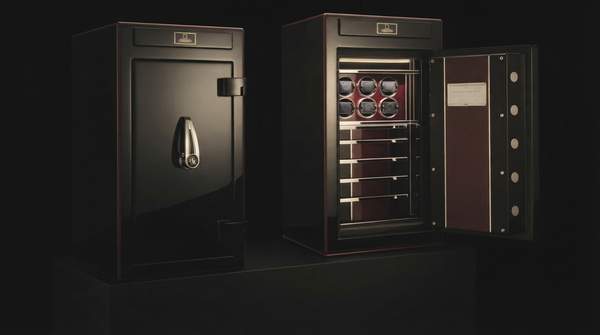
Buying a luxury home safe means balancing two demands that rarely come in the same product: certified protection against burglary and fire, and a piece of furniture elegant enough to sit inside a walk-in wardrobe or dressing room. The right approach is to work in sequence—define what you are protecting, decode the independent ratings, choose an access method, then layer on customization. This guide builds that decision framework and shows how makers like Agresti, Brown Safe, and Luxe Safes describe their place in the market. It is a guide to features, not a head-to-head model review, and it recommends no single brand; pricing varies too much with customization to be useful here.
Understanding Your Needs: Burglary vs. Fire Protection
Burglary resistance and fire protection are separate engineering problems, and a safe strong at one is not automatically strong at the other. A blog post by Gunnebo Safe Storage, the parent of Chubbsafes, frames the choice squarely: picking the right certifications should align with "your security needs, insurance requirements, and peace of mind," covering burglary, fire, or both. Start by inventorying contents—jewelry, watches, cash, and firearms call for burglary ratings; paper documents and media call for fire endurance.
Placement matters too. Tyler Lacoma, writing for CNET, notes that if a safe can be picked up and carried away, burglars often move it somewhere they can work on it—so mounting is advisable for most home safes. He suggests a closet as the best combination of safety, privacy, and access, and cautions against the main bedroom, which is where burglars tend to look first for jewelry.
Decoding Security Ratings: UL and EN Standards
Two families of standards dominate: Underwriters Laboratories (UL) burglary ratings in the American market, and the European EN standards. Before any UL rating is considered, safes must meet baseline criteria that INKAS Safes Manufacturing summarizes: a minimum weight of 750 pounds or anchor points for mounting, a body of at least one-inch-thick steel or equivalent, at least one UL Group 1, 1R, or 2M combination lock or Type 1 high-security electronic lock, corrosion protection, and a net working attack time of at least five minutes.
The letters TL stand for "Tool Resisting," as Steve Davidson explains at Dean Safe, and rated safes undergo a controlled, witnessed attack by engineers at Underwriters Laboratories who study the manufacturer's blueprints first to find weak points. A crucial detail: the clock runs only while a tool is actively attacking the safe—if a drill bit breaks, the timer pauses during the swap. Davidson's advice is practical: if your assets merit protection beyond a five-minute window, look at commercially rated TL safes.
| Requirement | UL-rated safes (all TL classes) | Class TL-15 |
|---|---|---|
| Weight or anchoring | Minimum 750 lbs or anchor points for mounting | Same minimum applies |
| Body construction | Minimum 1-inch steel or equivalent strength material | Same |
| Lock requirement | UL Group 1, 1R, or 2M combination lock, or Type 1 high-security electronic lock | Same |
| Attack testing | Witnessed attack by UL engineers using the maker's blueprints; clock runs only during active tool contact | Entry commercial tool-resistance class; higher classes like TRTL-60x6 exist for greater exposure |
Luxe Safes states that its TL15 and TL30 models serve clients "when insurance requirements demand that valuables be kept inside safes with these commercial high-security UL burglary ratings"—a useful reminder that insurers may dictate the minimum class before aesthetics ever enter the conversation. High Noble Safe Company's range runs from TL15 up to TRTL60x6, illustrating the ladder of protection available. Note that these explanations draw on industry reporting rather than the issuing bodies' own documentation.
Choosing Your Access Method: Biometrics, Digital, and Key Locks
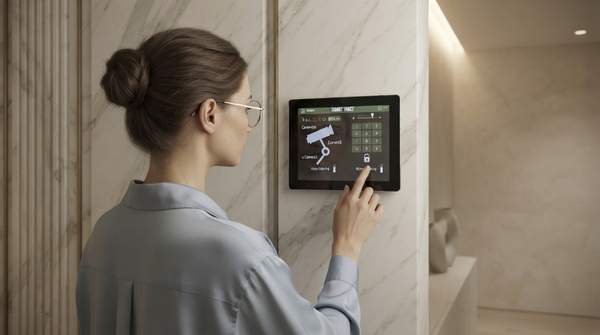
Lock technology is where convenience and security trade off most visibly. According to the Chubbsafes design blog, many modern home safes feature digital keypads, biometric fingerprint readers, and Bluetooth-enabled locks, offering multiple layers of convenience and security. Agresti offers a full spectrum on its luxury safes: a traditional key lock, a numeric keypad, or a biometric system that scans fingerprints, with each safe also supplied with a backup key for emergency openings—a detail worth demanding of any biometric proposal, since electronics can fail.
Reliability and feature sets vary between models and brands, so ask manufacturers directly which lock is standard on a given model, what the override method is, and how the biometric system handles false rejections. A fingerprint reader that hesitates every morning will defeat the purpose of daily-accessible jewelry storage.
The Art of Integration: Aesthetic Customization and Placement
Luxury makers distinguish themselves less by steel thickness than by how the safe disappears into a room. Agresti describes elevating the safe from a protective tool to "a true object of desire," an exquisite furnishing element seamlessly integrated into prestigious settings, including in-wall safes designed to fit within wardrobes and armored jewelry cabinets. Brown Safe says any security product it manufactures can be custom-tailored to fit individual requirements and personal style, with fully custom safes built to exacting specifications.
Customization typically spans both faces of the safe. Interiors can be built around specific collections—drawer layouts for jewelry and watches—while exteriors can be matched to decor. Safe and Vault Store's buying guidance lists color, lock type, trim, and finish as options that help match a safe to your home and improve usability, and the retailer offers custom-built safes tailored to exact specifications. Its range, spanning jewelry, watch, display, and whiskey safes, hints at how specialized storage has become.
Luxury Safe Decision Framework
Use this matrix to move from abstract standards to a concrete, comparable specification. Complete the "Your requirement" column for each row before contacting manufacturers; the resulting document becomes your checklist for comparing bespoke proposals.
| Decision dimension | What the evidence supports | Practical implication | Your requirement |
|---|---|---|---|
| Primary threat | Burglary and fire protection are separate ratings; match certification to contents and insurer | Insurers may mandate a minimum UL class before design begins | |
| Certification level | UL TL ratings require witnessed attack testing; TL-15 is the commercial entry class, TRTL-60x6 higher; EN 1143-1 governs burglary resistance in Europe | Ask which exact rating and standard each proposal carries, in writing | |
| Mounting | Safes that can be carried away invite removal; mounting or 750-lb-class weight is baseline | Plan anchoring into millwork from the start | |
| Access method | Key, numeric keypad, or biometric fingerprint readers available; backup key advised | Confirm the override mechanism for any electronic lock | |
| Interior | Custom drawer layouts for jewelry, watches, and specialized collections | Specify contents precisely so the layout is built around them | |
| Exterior | Color, trim, finish, and in-wall designs for wardrobe integration | Request finish samples alongside millwork plans | |
| Installation | White-glove delivery and designer/millworker coordination offered by luxury makers | Ask who coordinates with your designer and who anchors the safe |
Bespoke Services: Working with Manufacturers and Designers
The commissioning process is collaborative by design. Luxe Safes describes complete privacy and white-glove service, with custom interiors ranging "from modern minimalism to traditional elegance," plus nationwide delivery and professional installation—positioning itself to high-net-worth homeowners, interior designers, and insurance-sensitive installations. Agresti says it works closely with clients so every safe protects jewelry, cash, firearms, and other treasured possessions, whether as in-wall wardrobe units, armored jewelry cabinets, or fully customized solutions. Brown Safe adds that its product line developed through a hands-on approach with end users and can be tailored beyond the standard catalog.
As Luxe Safes puts it, its product "represents the art of security," incorporating intricate design details with luxury finishes—evidence that at this tier, the millwork conversation is as important as the steel. The extent of customization varies by manufacturer and client, so treat each proposal's scope as unique.
Making Your Informed Luxury Safe Decision
To select a luxury home safe, prioritize certified burglary and fire protection based on your valuables' risk profile, then choose an access method that balances security with convenience, and finally plan aesthetic integration and customization with your design professionals. The measurable outcome to aim for is a detailed, personalized specification document for a luxury safe, ready for manufacturer consultation, that explicitly lists required UL/EN ratings, preferred locking mechanisms, and aesthetic customization details. With that document in hand—every row of the matrix completed—you can compare bespoke proposals on evidence rather than showroom polish, and verify each claim against the standards your insurer and your collection actually require.
Sources
- Luxury safes - bespoke safes - luxury home safes - Italian made recessed safes - Agresti — Agresti Firenze
- Safes – Luxury Home Safes - Brown Safe Manufacturing, Inc.
- Custom Luxury Jewelry Safes, Made to Order — Luxe Safes
- Understanding Safe Ratings and Standards: A Guide to Choosing the Right Protection — BLOG
- Best Smart Home Safes for 2026: Tamper Sensing and More - CNET
- Burglary Safe Ratings: UL, TL, TRTL & TXTL Explained — INKAS® Safes Manufacturing
- TL Ratings Explained: What They Mean for Your Home Security — Dean Safe
- High Security Safes — High Noble Safe Company, Inc.
- How Modern Design Enhances the Security and Usability of Home Safes — BLOG
- Premium Quality Luxury Safes — Safe and Vault Store.com