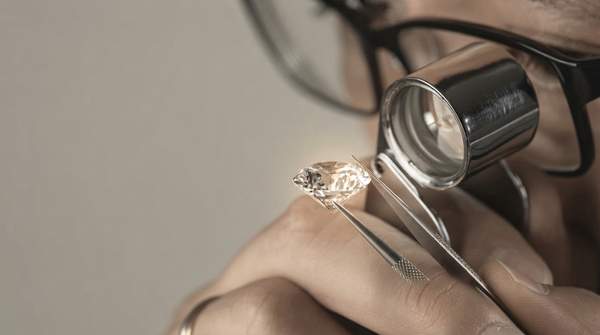
When a gemstone catches the light, what you see is not accident but engineering. The cutting style a lapidary chooses—brilliant, step, or a mixed combination of the two—determines whether a stone dazzles with rapid sparkle, flashes with rainbow fire, or glows with broad, mirror-like elegance. Understanding that design intent is the single most useful skill a high jewelry collector can bring to a purchase decision.
Understanding Gemstone Sparkle: Brilliance, Fire, and Scintillation Defined
Gem professionals deliberately avoid the word "sparkle" because it bundles three distinct optical phenomena. Brilliance is the consistent brightness a stone shows across its surface—the opposite of patchy dead zones where light leaks away instead of returning to the eye. A gemological guide from jeweler Bahlko identifies those dead zones as a cut problem rather than a flaw in the rough material itself.
Fire, sometimes called dispersion, is the colored sparkle that appears when light entering a gemstone is broken into its spectral hues. Angara's editorial team, defining these terms for diamond buyers, notes that fire is visible when a stone is exposed to light and tilted through certain angles. The geometry matters here: stones with steep crown angles and smaller tables produce more colored sparkle, at some cost to overall light return.
Scintillation, finally, is the sparkle most people picture when they imagine a diamond—the rapid, multi-directional flashes of bright and dark that play across the surface as the stone or the light source moves. A well-cut gem shows bright flashes across the entire surface; a poorly cut one sparkles only in one position, betraying light lost through its pavilion.
Brilliant Cuts: Maximizing Sparkle and Fire
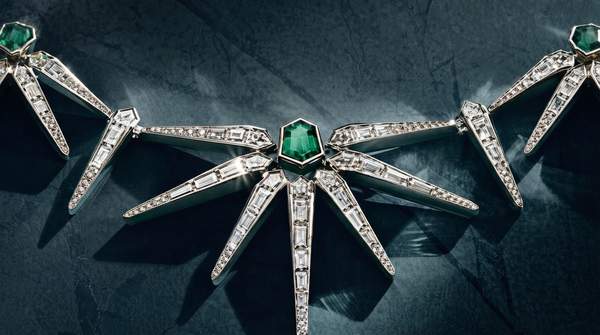
The brilliant cut is the family of cuts designed around light performance. Its triangular and kite-shaped facets, arranged around a central table and pavilion, exist to maximize scintillation and overall light return. As Taylor & Hart explains in its comparison of diamond cuts, the brilliant style emerged when precision cutting machinery made it possible to engineer a stone specifically for brightness and fire, and it quickly became the standard for traditional and fancy shapes alike.
The trade-off is built into the geometry. Because brilliant cuts scatter light in many directions at once, they produce the rapid flicker of scintillation rather than large, calm reflections. That intensity suits collectors who want a stone that appears alive in motion—flashing white light, rainbow color, and sparkle nearly simultaneously. The round brilliant is the archetype, and it is the only shape for which the Gemological Institute of America assigns an overall cut grade.