Michelin-starred kitchens across three continents are converging on the same conviction: that a memorable tasting menu begins with a sense of place. But how they get there differs sharply. Drawing on case studies from Tuscany, Lithuania, and the American South, three distinct strategies emerge—International Fusion, Modernized Tradition, and Ingredient-Led Innovation—and learning to spot them will change how you read a fine dining menu.
The Global Trend of Regional Innovation in Fine Dining
For today's starred chefs, regional sourcing is no longer a garnish on the menu; it is the foundation of culinary identity. Reporting on one-starred Lunasia in Tuscany frames the challenge precisely: beyond technical skill, chefs must establish a distinctive identity, adapt to changing ingredients and expectations, and innovate without losing a sense of place. That tension—between innovation and rootedness—defines the current moment in haute cuisine. The Michelin Guide's inaugural American South selection, published in November 2025, points the same direction, spotlighting restaurants whose identities are inseparable from regional produce, from Appalachian farms to Gulf seafood. What unites these otherwise disparate kitchens is a belief that local ingredients are not a limitation but a creative engine.
Strategy 1: International Fusion – Blending Local with Global Techniques
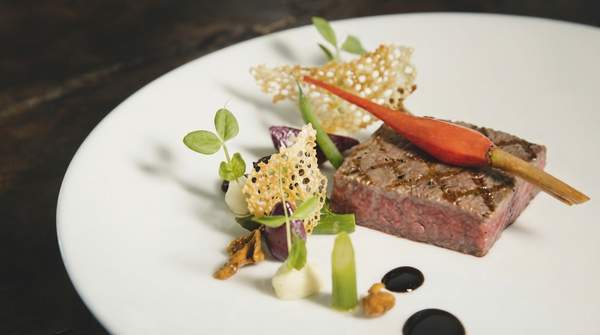
The first strategy treats regional ingredients as raw material for global technique. At Lunasia, chef Luca Landi draws on his Tuscan roots—raised in Garfagnana, he developed an early connection to the region's cooking traditions—then layers on an international résumé that includes Enoteca Pinchiorri in Florence, Le Louis XV in Monaco, Alinea in Chicago, and the study of kaiseki at Nihonryori RyuGin in Tokyo. The result is a cuisine that combines Tuscan character with international techniques. His experimental streak is well documented: in 2009 he won the Gelato World Cup with a savoury creation. On the plate, this philosophy surfaces in dishes like delicately seared scampi with basil ice cream and pine nuts, where familiar seafood meets herbal notes and contrasting textures. The innovation is unmistakably modern, but the ingredients remain stubbornly, proudly Tuscan.
Strategy 2: Modernized Tradition – Reimagining Local Heritage
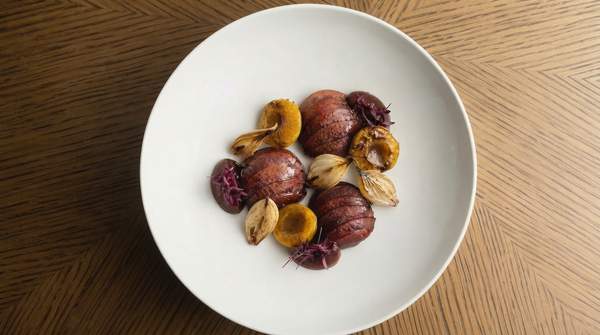
The second strategy works in the opposite direction: rather than importing global technique onto local produce, it takes inherited recipes and refines them for the contemporary dining room. Vilnius offers a vivid illustration. During the Lithuanian capital's Gastronomy Week in October 2026, its Michelin-starred restaurants offered tasting menus built on exactly this approach. One combines modern culinary techniques with family recipes, childhood memories, and ingredients grown at its own farm; its six-course menu features traditional Lithuanian flavours reimagined in contemporary dishes—fermented vegetables, beef tartare with porcini oil, handmade dumplings, and slow-cooked beef. The meal closes with a cherry dessert inspired by traditional methods of preserving summer ingredients for winter. Here, innovation means honoring cultural heritage while offering a refined, modern experience, with farm-to-table sourcing tightening the link between memory and menu.
Strategy 3: Ingredient-Led Innovation – Celebrating Terroir and Provenance
The third strategy lets the ingredient itself carry the argument. In the American South, the Michelin Guide highlights kitchens whose identity is built on provenance and simplicity of preparation. At Zasu in New Orleans, opened by chef Sue Zemanick in 2019, the tightly edited menu features a dozen or so dishes focused on seafood and blending local flavors with French techniques. An even purer expression appears in the Guide's Green Star recognition: Counter in Charlotte, North Carolina, sources the majority of its ingredients from more than 20 local farms and runs a fermentation and preservation program to reduce waste. In this model, the chef's craft lies less in transformation than in curation—selecting exceptional regional produce and seafood, then preparing it so its natural flavors and textures remain the point. Sustainability and terroir become the restaurant's defining credentials.
Three Strategies for Regional Ingredient Innovation in Fine Dining
Use this comparison to identify which philosophy a restaurant pursues before you book. The three models are not exhaustive or mutually exclusive—many kitchens blend elements of each—but they capture the dominant patterns in starred dining today.
| Culinary Strategy | Core Philosophy | Example Restaurant(s) | Illustrative Dish/Ingredient |
|---|---|---|---|
| International Fusion | Combines regional ingredients with international culinary techniques and influences, bridging diverse traditions. | Lunasia (Italy), under chef Luca Landi | Seared scampi with basil ice cream and pine nuts; Tuscan ingredients in innovative preparations |
| Modernized Tradition | Reinterprets traditional local recipes and ingredients using contemporary methods, preserving heritage in a refined setting. | Michelin-starred restaurants in Vilnius, Lithuania | Fermented vegetables, beef tartare with porcini oil, handmade dumplings, cherry dessert from traditional preserving methods |
| Ingredient-Led Innovation | Emphasizes the unique qualities and provenance of regional ingredients, highlighting their natural flavors and textures. | Zasu (New Orleans); Counter (Charlotte, North Carolina) | Local seafood with French techniques; ingredients from more than 20 local farms with a fermentation and preservation program |
Beyond the Plate: A Holistic Regional Experience
What separates a genuine commitment to place from a menu gimmick is how far the philosophy extends past the food. Lunasia offers the clearest case study. Its wine cellar emphasizes Tuscan vineyards and traditional winemaking practices, extending the restaurant's regional identity beyond the plate and into the wider hospitality experience. The setting itself—an atmosphere connected to the property's broader sense of place—reinforces the message before the first course arrives. This holistic approach, aligning sourcing, menu development, technique, and service, is characteristic of restaurants deeply committed to a sense of place rather than a universal standard for all Michelin-starred establishments. But when you encounter it, the effect is cumulative: the wine, the room, and the food all tell the same story about where you are.
Recognizing Culinary Philosophies for Your Next Dining Experience
Armed with this framework, you can decode a restaurant's philosophy from its public face. A menu that pairs local seafood with unexpected global flourishes—herbal ice creams, Japanese-influenced plating—signals International Fusion. Tasting menus that name-check family recipes, childhood memories, or the restaurant's own farm point to Modernized Tradition. And a kitchen that foregrounds its supplier list, preservation programs, or Green Star-style sustainability credentials is practicing Ingredient-Led Innovation. One caveat: menus and restaurant details reflect information available as of late 2025 and 2026, and chefs evolve—treat these as illustrative examples, not a complete or permanent catalog.
Selecting Your Next Gastronomic Journey
When choosing a Michelin-starred restaurant, consider which culinary philosophy—International Fusion, Modernized Tradition, or Ingredient-Led Innovation—best aligns with your desired experience of regional ingredients. Do you want your terroir filtered through global technique, elevated heritage cooking, or produce allowed to speak plainly? The measurable indicator is straightforward: the restaurant's menu descriptions, chef's stated philosophy, and featured ingredients will clearly indicate its primary approach to regional sourcing. Read them before you reserve, and you will know exactly which kind of journey you are booking—and whether the wine list and dining room are telling the same story as the plate in front of you.