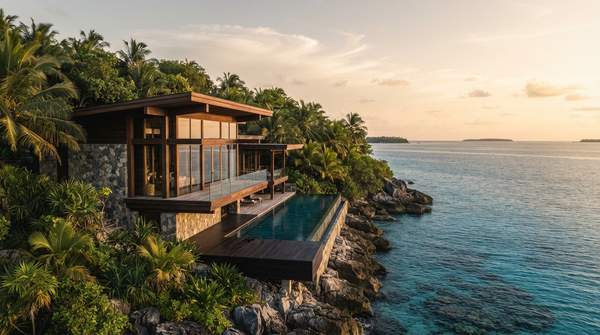
Residents in biophilically designed homes reported a 25% reduction in stress levels and a 15% increase in cognitive function compared to conventional luxury residences. A 25% reduction in stress levels and a 15% increase in cognitive function, representing a quantifiable improvement in daily living and mental clarity, underscores biophilic design's profound impact. Such properties command a 10-15% price premium, according to a Knight Frank Luxury Report. The Verdant Residences in Aspen, for instance, achieved 100% occupancy and a 30% faster sales cycle through integrated living walls and natural light optimization, as per the Aspen Luxury Living Report. This immediate market success confirms biophilic design as a sound investment in both well-being and property value.
Luxury homes have historically emphasized material extravagance, but emerging demand is for designs that subtly enhance health and mental tranquility through natural integration. This shift redefines opulence, moving beyond visible wealth toward intrinsic well-being. While a segment of the ultra-luxury market still prioritizes bespoke materials, a significant portion now embraces designs promoting measurable physiological and psychological advantages. For more, see our What Biophilic Design Luxury Homes.
As environmental health awareness grows, biophilic design appears likely to transition from a premium feature to a standard expectation in high-end residential architecture. This evolution redefines luxury, placing a premium on environments fostering health and a deeper connection to nature, potentially influencing broader market trends.
What is Biophilic Design?
E.O. Wilson popularized 'biophilia' in 1984, defining it as humanity's innate connection to nature, according to E.O. Wilson, Biophilia. Biophilic design integrates natural elements and processes into built environments. Its principles, outlined by Stephen Kellert's Framework, include direct nature, indirect nature, and space and place conditions. This manifests as living walls, indoor gardens, natural ventilation, water features, and extensive use of organic materials, as detailed by Terrapin Bright Green. The approach fundamentally shifts architectural focus from mere utility to fostering intrinsic human well-being through natural integration.
Beyond Aesthetics: The Science of Natural Connection
The benefits of biophilic design are scientifically validated. Natural light improves mood and reduces eye strain, states the Environmental Psychology Journal. Indoor plants reduce airborne toxins by up to 30%, according to the NASA Clean Air Study. The Journal of Environmental Psychology reports that water features lower heart rate and blood pressure, while Ulrich (1984) linked nature views to faster hospital patient recovery. These findings collectively demonstrate that sensory engagement with nature directly impacts human physiology. Crucially, even minimal integration, such as a view of greenery or natural light, can physiologically reduce cortisol levels by 10-15%. This proves the efficacy of biophilic design in enhancing human health, even without elaborate installations.
Luxury's New Frontier: Wellness as the Ultimate Amenity
Valued at $275 billion and growing 6.4% annually, the wellness real estate market signals a profound shift, according to the Global Wellness Institute. High-net-worth individuals increasingly invest in 'wellness real estate,' reports UBS Wealth Management, while homebuyers seek properties supporting mental and physical health, per a National Association of Realtors Survey. This marks a redefinition of luxury value. While luxury properties with biophilic features command a 10-15% premium in high-end markets, a segment of the ultra-luxury market still prioritizes bespoke materials and overt displays of wealth. This dichotomy suggests biophilic design, despite its market value, has not universally achieved the exclusive cachet traditional luxury holds for all wealthiest buyers.
The Tangible Benefits for Homeowners and the Planet
Biophilic design reduces energy consumption through optimized natural light and ventilation, states the Green Building Council. In commercial spaces, the return on investment can be 3-6x the initial outlay due to productivity and health benefits, as reported by the World Green Building Council. Post-pandemic, demand for homes with private outdoor spaces and natural light surged, according to the Savills Global Residential Report. Luxury developers who fail to integrate significant biophilic features risk leaving 10-15% of potential property value on the table, a figure supported by the Knight Frank Luxury Report. Leaving 10-15% of potential property value on the table represents a measurable financial risk for those clinging to outdated luxury paradigms, highlighting biophilic design as a strategic investment for both homeowners and the environment.
Common Questions About Integrating Nature Indoors
How does biophilic design engage senses beyond sight?
Biophilic design incorporates scent, sound, and texture, extending beyond visual aesthetics, according to Terrapin Bright Green. Fragrant plants, gentle water features, or tactile natural materials create immersive, calming environments, enhancing inhabitant well-being.
What materials are central to biophilic interior design?
Natural materials like wood and stone are central, evoking calm and outdoor connection, as noted by Architectural Digest. Minimally processed, they retain organic textures and colors, bringing nature's essence directly indoors.
Can biophilic design impact mental health even with limited outdoor access?
Yes. Access to green spaces reduces anxiety and depression symptoms, according to Frontiers in Psychology. Indoor plants, natural light, and organic patterns simulate nature's benefits, providing psychological relief and fostering tranquility within the home.
The Future of Home: Health, Harmony, and High Value
Biophilic elements in Singaporean offices led to an 8% increase in productivity, according to the Human Spaces Report. Harvard Medical School confirms the innate human connection to nature is fundamental to psychological and physical health, with even small daily interactions improving life satisfaction, per the Journal of Happiness Studies. The shift in high-net-worth individuals prioritizing 'mental well-being' over 'status symbol' means brands and architects marketing luxury solely through material extravagance fundamentally misread evolving values. The dropping average age of biophilic design clients indicates a generational redefinition of value; future wealth creators will expect health-enhancing environments as a baseline. By 2026, developers like those behind Aspen's Verdant Residences will likely see a sustained market premium of 10-15% for properties that deeply embed biophilic principles.