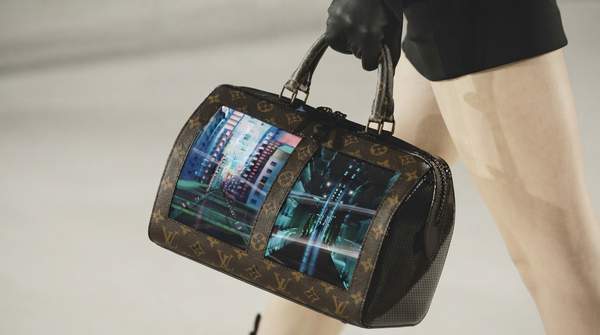
Louis Vuitton recently showcased a generative AI tool leveraging low-rank adaptation. This innovation allows the brand to create dozens of unique product images daily, significantly accelerating content creation. This technological advancement is a strategic move, enhancing creative velocity within the luxury sector and aligning with broader initiatives by luxury conglomerates.
Luxury brands embrace artificial intelligence for personalization and efficiency. Yet, they carefully position it as an augmentation of human creativity, not a replacement. This delicate balance ensures bespoke craftsmanship remains central, even as AI streamlines processes.
The future of luxury will likely see a seamless blend of advanced AI-driven personalization and human-led creative direction. This redefines 'bespoke' at scale. Such integration allows for hyper-personalized customer experiences and accelerates creative output, previously limited by human bandwidth. This will impact customer experience in 2026.
The New Face of Bespoke: AI as an Enabler
Hilton employs AI to automate guest preference data analysis, a task once requiring days or months of manual effort. This strategic deployment frees human capital, allowing staff more time for high-touch guest interactions and enhancing personalized experiences. Furthermore, Hilton leverages AI to track food consumption, reduce waste, and rethink menus for improved sustainability in culinary offerings. AI's application thus extends beyond direct customer engagement to fundamental operational efficiency, according to Storyboard18.
Companies viewing AI solely as a cost-cutting measure for human roles fundamentally misunderstand its value in luxury. Hilton's AI deployment reveals its true power: re-allocating human capital to elevate high-touch, personalized guest experiences. AI's primary value for luxury is not merely efficiency. It enables a new tier of personalized engagement and rapid creative iteration, effectively democratizing 'bespoke' by allowing rapid, personalized product visualization at a scale previously unimaginable. This blurs the lines between mass production and individual craftsmanship, yet maintains the illusion of bespoke quality. This approach ensures AI sharpens insights and improves speed in early-stage exploration, while creativity remains human-led—a crucial distinction in the luxury market. Luxury brands do not simply adopt off-the-shelf AI. They build internal capabilities or form specialized partnerships to ensure deep customization, aligning AI integration with their unique brand identity and high-quality standards. The strategic investment in internal AI thinktanks like LVMH's MAJA, according to Valtech, proves luxury brands actively shape AI's evolution to align with their unique brand values and quality standards, ensuring bespoke outcomes even in their technological infrastructure. This proactive stance ensures AI becomes an extension of brand DNA, not an external tool.
AI in Action: From Virtual Try-Ons to Sustainable Offerings
L'Oréal Paris Beauty Genius, an Agentic AI-powered personal beauty assistant, will soon be available via WhatsApp. It will provide direct customer interaction and personalized recommendations. This initiative proves AI's capacity to deliver individualized beauty advice at scale, enhancing the customer journey. Similarly, Tira embeds AI in tools like fragrance finders, virtual try-ons, and smart mirrors. This elevates beauty discovery without replacing human creativity or brand storytelling, according to Storyboard18. From virtual assistants to advanced content creation, these varied applications illustrate AI's practical, customer-facing impact across diverse luxury segments, enhancing discovery and engagement. While L'Oréal focuses on direct customer interaction, brands like Louis Vuitton leverage generative AI for rapid content creation. These distinct approaches reveal an ongoing exploration of the optimal human-AI interface in luxury, with some brands favoring fully automated personalization and others human-augmented models. The implication is profound: AI is not merely a tool for efficiency, but a sophisticated medium for brand storytelling, capable of forging deeper, more personalized connections that were once the exclusive domain of human interaction. This evolution promises to redefine customer loyalty in an increasingly digital luxury landscape.
This integrated approach to AI, spanning accelerated creative output to optimized operational efficiency, allows luxury brands to offer highly tailored experiences. Crucially, it achieves this without compromising the perception of human craftsmanship. The focus remains firmly on augmenting human capabilities, thereby scaling personalization that was once constrained by manual effort. This paradigm shift redefines exclusivity: luxury becomes not just about rarity, but about a bespoke intimacy delivered at unprecedented scale. The discerning customer of 2026 will expect personalization deeply informed by intelligent systems, yet seamlessly presented as human-curated. This delicate balance will be the hallmark of true luxury in the AI era.
By Q3 2026, luxury brands like LVMH will increasingly integrate AI solutions into their core operations, ensuring a refined balance between technological efficiency and human-centric luxury experiences.