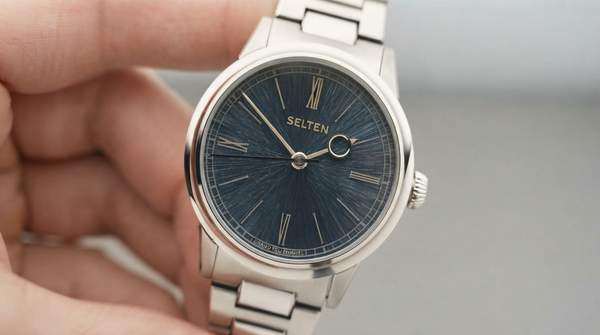
The Citizen 0100, currently the most accurate watch in the world, achieves its unparalleled precision with a specially cut quartz crystal vibrating over 8 million times per second. This remarkable feat of engineering, operating at a frequency of 8,388,608Hz, represents the zenith of contemporary timekeeping, pushing the boundaries of what is mechanically possible for a wristwatch. The intricate process of stabilizing such a high-frequency oscillation showcases a profound mastery of material science and micro-electronics, delivering a level of accuracy that redefines expectations for personal chronometry, making it a benchmark for all types of watch movements explained in 2026.
Quartz movements offer vastly superior accuracy and require less frequent attention, but mechanical watches continue to command higher prices and cultural prestige. This creates a compelling dichotomy in the luxury market, where practical utility often takes a backseat to historical resonance and intricate craftsmanship. Consumers often prioritize distinct values beyond mere timekeeping precision.
The market will likely continue to segment, with quartz dominating for utility and smartwatches for connectivity, while mechanical watches remain a niche for luxury, heritage, and appreciation of engineering. A consumer base increasingly prioritizes emotional and artistic connections over purely functional attributes in their horological choices.
The Inner Workings: Mechanical vs. Quartz Fundamentals
Quartz watches are generally designed to vibrate at a frequency of 32,768Hz, a standard that provides remarkable stability for timekeeping. This oscillation, powered by a battery and regulated by electronic circuitry, forms the core of its precision, converting consistent vibrations into precise time increments. The electronic nature of quartz movements allows for a high degree of control over the timekeeping element, minimizing external influences.
In contrast, mechanical watches rely on an intricate system of springs, gears, and a balance wheel to keep time. This complex arrangement, powered by a wound mainspring, operates purely through kinetic energy and intricate physical interactions. The inherent friction and temperature sensitivity within mechanical movements mean they typically have an accuracy ranging from ±20-40 seconds per day, according to Romlicen. The fundamental difference in their power source and timekeeping mechanism dictates their baseline performance and inherent precision. Based on the stark accuracy differences reported by Romlicen, the luxury watch market is clearly selling a narrative of heritage and craftsmanship, not superior timekeeping, to its affluent consumers.
The intricate dance of tiny components, visible through exhibition casebacks on many luxury mechanical watches, provides a visual and tactile experience that quartz movements cannot replicate. This deliberate embrace of human-scale engineering, with its inherent imperfections, forms a significant part of the mechanical watch's aspirational counter-narrative to modern, invisible precision. While quartz movements offer a pragmatic solution to timekeeping, mechanical movements offer a tangible connection to horological tradition and the artistry of micro-mechanics.
Precision, Power, and Practicality: A Head-to-Head Comparison
| Feature | Quartz Movement | Mechanical Movement |
|---|---|---|
| Typical Accuracy | ±10-15 seconds per month | ±20-40 seconds per day (non-certified) |
| Power Reserve | Years (battery life); Significantly longer for solar | 38-42 hours (traditional); 60+ hours (modern) |
| Maintenance Frequency | Battery replacement every 3-5 years | Service every 3-5 years; daily winding/wearing |
Standard quartz watches typically maintain accuracy within ±10-15 seconds per month, representing a significantly higher baseline precision than most mechanical counterparts, as detailed by Romlicen. This superior accuracy, combined with minimal maintenance, positions quartz as the practical choice for everyday reliability. The convenience extends to power reserves, where quartz watches only need their batteries replaced every 3 to 5 years, though solar-powered alternatives like Citizen's Eco-Drive can last significantly longer, according to Wallace Allan.
Conversely, mechanical watches, while requiring more frequent attention, have seen improvements in their practical aspects. The standard power reserve for mechanical watch movements used to be around 38 to 42 hours, but many modern mechanical watch movements now reach 60 hours or more of power reserve, as noted by Barrington Watch Winders. Incremental gains, while still dwarfed by the inherent convenience of quartz, show a commitment to enhancing user experience within the traditional framework. While quartz movements offer consistent, low-maintenance accuracy, mechanical movements are evolving to offer extended power reserves, balancing tradition with modern convenience. The continued demand for mechanical watches, despite the high maintenance burden of daily winding or wearing, suggests that consumers are actively choosing engagement with an object over passive convenience.
The decision between these movements often hinges on whether the owner prioritizes set-it-and-forget-it precision or the tactile interaction and historical lineage associated with a mechanical timepiece. Intrinsic value, often tied to craftsmanship and heritage, competes with the tangible benefits of technological advancement, reflecting a broader consumer trend.
The Quest for Ultimate Accuracy: Certified Movements
Mechanical watches tested and certified as a chronometer will retain an accuracy of -4/+6 seconds a day, a rigorous standard set for high-precision timepieces by organizations like COSC (Contrôle Officiel Suisse des Chronomètres), as certified by Longines. This certification process involves subjecting movements to a series of tests over 15 days, across various temperatures and positions, to ensure they meet stringent accuracy criteria. Achieving chronometer status represents a significant horological accomplishment, showcasing a manufacturer's dedication to precision engineering within the mechanical domain.
However, even this pinnacle of mechanical precision remains drastically less accurate than a standard, mass-produced quartz watch, which maintains accuracy within ±10-15 seconds per month (equivalent to approximately 0.3-0.5 seconds per day). For those prioritizing verifiable precision, certified chronometers represent the pinnacle of traditional timekeeping, offering a level of accuracy that is celebrated within its own context, distinct from the absolute precision of quartz. COSC chronometer certification for mechanical watches, which still allows for daily deviations far exceeding standard quartz accuracy, shows that 'precision' in this segment is a relative art form, not an absolute scientific benchmark.
This pursuit of mechanical chronometry speaks to a cultural value placed on mastering an inherently less precise system. It is not about achieving the highest possible precision, but about pushing the boundaries of what is achievable with springs, gears, and levers. Mechanical watches are valued for their deliberate embrace of imperfection and human-scale engineering, offering an aspirational counter-narrative to the flawless, often invisible, precision of modern electronics. This aspiration aligns with a broader thesis.
Beyond Precision: The Appeal of Engagement and Modernity
Automatic watches need to be worn daily or wound daily to remain functional and for their movement mechanisms to be regulated, requiring a conscious interaction from the owner, as highlighted by Wallace Allan. This necessity for engagement is not a drawback for many enthusiasts; rather, it is a core part of the appeal, fostering a deeper connection between the wearer and their timepiece. The act of winding a watch or feeling the rotor spin reinforces the tangible, mechanical nature of the object, contrasting sharply with the passive experience of a digital device.
In stark contrast, smartwatches appear to have the fastest market growth, according to Watchcrunch, appealing to consumers who prioritize cutting-edge technology, connectivity, and a multitude of functions beyond simple timekeeping. This segment values utility, convenience, and seamless integration with other digital ecosystems, often viewing a watch as an extension of their smartphone. The choice between mechanical and smartwatches often transcends mere timekeeping, showing a preference for either traditional engagement and craftsmanship or cutting-edge functionality and connectivity. While Watchcrunch highlights smartwatches' rapid market growth, the enduring appeal of mechanical watches, despite their high maintenance (Wallace Allan) and lower accuracy (Romlicen), reveals a distinct consumer segment actively seeking engagement.d a tangible connection to tradition over pure convenience or technological advancement.
This bifurcation of the watch market demonstrates that value is increasingly subjective. Utility-driven consumers gravitate towards smartwatches for their advanced features, while luxury consumers double down on heritage and the artisanal qualities of mechanical watchmaking. The market's valuation of mechanical watches clearly prioritizes something other than timekeeping precision, given the astronomical difference in accuracy with even basic quartz versus mechanical chronometers, let alone hyper-accurate models like the Citizen 0100.
Common Questions About Watch Movements
Which watch movement is best for long-term value?
For long-term financial value and collectibility, mechanical watches, especially those from established luxury brands, typically hold or increase in value due to their craftsmanship and limited production. Quartz watches, while offering excellent initial value for precision, generally do not appreciate in the same manner, often seeing their value diminish with technological obsolescence or battery issues. The investment in a mechanical timepiece often includes the appreciation of its intricate engineering and heritage, which contributes to its enduring market appeal.
How do automatic watch movements work?
Automatic watch movements, a type of mechanical movement, utilize the natural motion of the wearer's wrist to power the watch. An oscillating weight, known as a rotor, spins with wrist movement, winding the mainspring and storing energy. This continuous winding negates the need for manual daily winding, offering a convenience not found in purely manual mechanical watches, though consistent wear or a watch winder remains necessary for optimal function. This self-winding mechanism ensures the watch remains operational as long as it is regularly worn or kept in motion.
Making Your Choice: What Matters Most
The choice among watch movements ultimately depends on an individual's priorities, whether they seek the unwavering precision of modern technology or the intricate artistry of traditional horology. For those who prioritize absolute accuracy, minimal maintenance, and perhaps smart functionalities, quartz or smartwatch movements offer compelling advantages. These options deliver timekeeping precision that far outstrips mechanical counterparts, often at a more accessible price point.
Conversely, the allure of mechanical watches lies in their narrative of heritage, the visible craftsmanship of their intricate components, and the unique engagement they demand from their owner. This segment of the market values the deliberate embrace of imperfection and human-scale engineering, seeing it as a unique, aspirational counter-narrative to the pervasive precision of modern technology. Ultimately, the 'best' watch movement is subjective, depending on whether one values cutting-edge precision and convenience, or the artistry and heritage of traditional horology.
The market bifurcation will likely continue through 2026, with Watchcrunch indicating sustained growth for smartwatches, while brands like Patek Philippe and Audemars Piguet will continue to command premium prices for mechanical masterpieces that celebrate human-scale engineering. This enduring appeal of mechanical watches, despite their practical limitations, solidifies their position as cultural artifacts rather than mere timekeeping instruments, emphasizing that the value of a timepiece extends far beyond its ability to simply tell time.