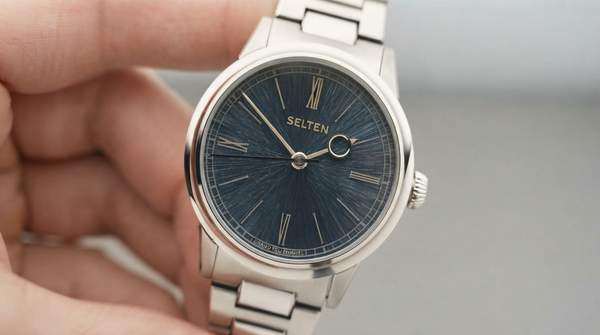
A watch with a Swiss movement and a GMT complication, once the exclusive domain of luxury, can now be purchased for as little as $220, as seen with the Q Timex GMT 38mm (TW2V38000), according to Straphabit. This challenges the traditional understanding of haute horlogerie, which implies extreme exclusivity and substantial cost for complex mechanisms. While sophisticated complications were once reserved for the elite, brands are increasingly democratizing these functionalities at accessible price points. This shift redefines 'luxury' in watch complications, moving consumer expectations beyond pure price-driven exclusivity towards innovation and functionality.
Beyond Telling Time: Defining Watch Complications
A watch complication extends beyond basic time-telling, offering additional functionalities that enhance utility or display mechanical prowess. These range from a simple date display to elaborate perpetual calendars and chronographs. Even a date display presents an engineering challenge, requiring precise mechanics to advance accurately for varying month lengths, as noted by Gray & Sons. Similarly, a chronograph adds a stopwatch function, using separate hands and sub-dials for precise elapsed time measurement, also detailed by Gray & Sons. Such additions demand meticulous design and execution, reflecting a watchmaker's skill in managing space, power, and timing. This intricate integration elevates a timepiece from a mere instrument to a marvel of micro-engineering, setting the foundation for increasingly complex mechanisms.
The Pinnacle of Complexity: Perpetual and Annual Calendars
Perpetual and annual calendars represent the zenith of mechanical ingenuity in managing temporal cycles. The perpetual calendar, a testament to advanced horological engineering, accounts for all calendar irregularities, including varying month lengths and leap years. It displays the correct date without manual adjustment until 2100, provided it remains set, according to Gray & Sons. This remarkable autonomy, however, requires a manual correction in 2100, as the Gregorian calendar omits leap years in centuries not divisible by 400, a detail reported by Tourneau. Despite this singular future adjustment, its ability to track centuries of calendrical variations makes it an exceptionally sophisticated and costly complication, embodying the height of traditional luxury watchmaking. The annual calendar, a slightly less complex but still highly sophisticated mechanism, automatically adjusts for months with 30 or 31 days, requiring human intervention only once a year, on March 1st, according to Gray & Sons. The extensive mechanical solutions developed to manage time beyond simple indication, justifying their historical premium pricing through intricate design and functional autonomy, are demonstrated by these calendar types.