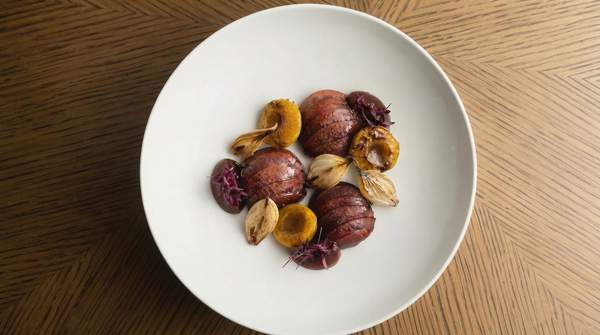
At Sublimotion in Ibiza, a single 20-course meal costs €2,000 per person. This multi-sensory spectacle, complete with virtual reality and edible art, stands as the world's most expensive private dining experience.
These exclusive dining experiences are celebrated for their culinary innovation and personalized service. Yet, their extreme price and limited access often alienate the very audience that appreciates gastronomic artistry. The market for hyper-personalized, immersive dining is projected to grow among affluent consumers, even as general restaurant dining faces challenges, according to a Deloitte Luxury Report. Extreme pricing and demand signal a market shift in luxury dining: from mere sustenance to an all-encompassing, status-defining event.
The market for hyper-exclusive private dining will likely continue to expand, driven by a desire for unique status symbols and immersive experiences. However, it will face increasing scrutiny regarding its sustainability and social equity. For many chefs, these private dining experiences offer unparalleled creative freedom, allowing them to execute their purest culinary vision without commercial constraints, according to Chef's Interview. This unbridled vision is a core component of their escalating value.
Beyond the Velvet Rope: A Glimpse Inside the World's Most Exclusive Tables
Reservations for The Chef's Table at Brooklyn Fare often require booking months in advance, with a waitlist exceeding 10,000 people, according to the New York Times. Some pop-up private dining clubs, like 'The Supper Club' in London, only reveal their location 24 hours before the event to members, as reported by Tatler. Both examples underscore how engineered scarcity and curated secrecy define elite dining, redefining luxury as an experience of access rather than mere consumption.
Katz's Deli (The Ludlow Room)
Best for: Patrons seeking a blend of historical charm and exclusive New York City dining.
The Ludlow Room at Katz's Deli, closed since 1949, recently reopened as an exclusive private dining space, seating 68. This long-hidden room offers a unique historical experience within an iconic NYC deli, which first opened in 1888, according to Source 0 (T1-AUTH). Its renovation after decades of disuse establishes it as a living piece of New York history. Its allure is less about cutting-edge cuisine and more about a rediscovered piece of history, a unique blend of nostalgia and exclusivity.
Strengths: Historical significance, rediscovered exclusivity, capacity for larger groups. | Limitations: Less focus on cutting-edge culinary spectacle compared to other venues. | Price: Not specified in provided facts.
Kuro Kisumé
Best for: Discerning diners seeking secluded, high-quality Japanese cuisine.
Kuro Kisumé provides a secluded dining space that seats 44 for dining or 50 standing. Menus start from $95 per person, according to Source 4 (T2-ANALYSIS). This venue, described as a leading restaurant, offers a private setting for a more intimate experience. While less extreme in price, it offers a refined intimacy, proving exclusivity isn't solely about astronomical cost.
Strengths: Secluded space, flexible capacity, established restaurant reputation. | Limitations: Lower price point may suggest less extreme exclusivity than others. | Price: Menus start from $95 per person.

At Ultraviolet by Paul Pairet in Shanghai, each of the 10 guests receives a personalized menu and sensory experience tailored to their preferences, according to the Michelin Guide. Exclusivity, then, is crafted through a combination of scarcity, secrecy, and deeply personalized, immersive culinary artistry.
More Than Just a Meal: The Hidden Dimensions of High-End Dining
A significant portion of the high cost at places like Masa in New York covers the sourcing of rare, often air-freighted ingredients, as reported by the Wall Street Journal. Provenance, then, becomes another facet of luxury. Gaining access to certain private dining events, like those hosted by 'The Secret Supper Society,' often requires an invitation from an existing member, emphasizing social connections over wealth, according to Vanity Fair. These disparate access points reveal that luxury is defined not just by what's on the plate, but by who you know and what you're willing to pay for rarity. The true allure lies in a blend of tangible rarity and intangible social capital, making these meals a statement of one's place in an elite stratum.
| Feature | Access Mechanism | Chef Interaction | Sensory Elements | Cost Driver |
|---|---|---|---|---|
| Sublimotion | Open Booking (high price) | Minimal (focus on spectacle) | Multi-sensory immersion, VR | Theatrical production, technology |
| Masa | Reservation | Direct (omakase) | Purity of ingredients | Sourcing rare ingredients |
| The Secret Supper Society | Invitation-only | Varies by event | Unique pop-up settings | Social connection, exclusivity |
These exclusive venues often serve as incubators for culinary innovation, pushing boundaries in food science, presentation, and service that eventually trickle down to broader dining, according to Restaurant Magazine. The true value extends beyond the meal, offering a glimpse into culinary frontiers that eventually shape broader dining trends.
The Cost of Culinary Perfection: Scrutiny and Sustainability
The €2,000 price tag at Sublimotion, driven by virtual reality and sensory immersion, confirms that the ultra-luxury dining market sells an unattainable, Instagrammable experience. This makes it a status symbol first, a restaurant second. The 'alienation' of the gastronomic audience indicates these exclusive venues actively segment the market, creating a new tier of luxury consumption where the barrier to entry is the appeal. This fundamentally alters the definition of 'haute cuisine' for the hyper-wealthy. The market's segmentation, while lucrative, risks isolating haute cuisine from its broader cultural relevance, forcing a reckoning with its ethical footprint.
Critics argue that the exorbitant prices and exclusivity of these experiences contribute to a growing disconnect between the ultra-rich and everyday society, as reported by The Guardian. This societal chasm forms a significant part of the scrutiny these establishments face. Despite their exclusivity, these high-end establishments often support a network of specialized suppliers, from artisanal farmers to rare wine distributors, according to Food & Wine Magazine. This network reveals a complex economic impact.
The global sourcing of exotic ingredients for these experiences raises questions about their environmental footprint, despite efforts by some chefs to source locally, according to Bon Appétit. While these dining experiences represent the pinnacle of luxury and culinary art, their environmental and social costs are increasingly part of the conversation.
The hyper-exclusive dining sector will likely continue its expansion, yet its long-term viability appears contingent on addressing growing calls for greater sustainability and social responsibility.