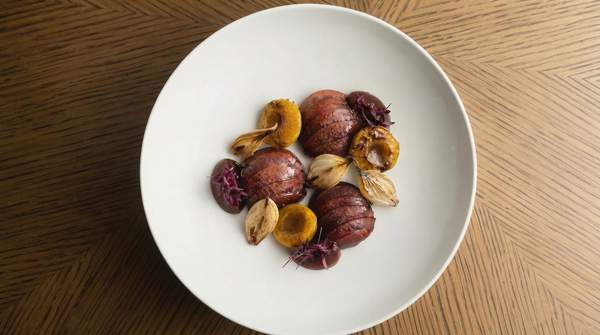
At Eleven Madison Park, the world's only fully vegan restaurant to hold three Michelin stars, a tasting menu costs USD $365 per person. This price point, defying assumptions of affordability, establishes plant-based dining as a high-end experience in 2026, fundamentally challenging established notions of luxury. Fine dining has historically relied on animal proteins and rich dairy. Yet, a growing number of Michelin-starred establishments now prove plant-based menus can achieve the highest culinary accolades. This accelerating recognition suggests haute cuisine will increasingly integrate, and perhaps prioritize, sustainable and ethical plant-forward approaches, reshaping culinary prestige.
The Global Bloom of Plant-Based Stars
Beyond Eleven Madison Park, plant-based fine dining expands globally. Encanto, JOIA, Mater Terrae, TIAN, and Cookies Cream stand as top plant-based Michelin Star restaurants for 2025 (alltrueist). In Berlin, Bonvivant Cocktail Bistro fully transitioned its menu, including brunch, to vegan (Green Queen Media). This global proliferation across diverse establishments confirms plant-based culinary artistry has moved from niche to mainstream, reshaping international gastronomic landscapes.
Nuances in the Green Revolution
The plant-based movement, while gaining momentum, is not uniformly strict. JOIA, for instance, operates as roughly 80 percent vegan and entirely gluten-free (alltrueist). This flexible approach broadens appeal, catering to diverse dietary needs beyond strict veganism. TIAN further earned a Michelin Green Star (alltrueist), recognizing its commitment to sustainable practices. This spectrum of plant-forward approaches, from mostly vegan to sustainability-focused, reveals a nuanced evolution rather than a rigid, universal embrace of strict veganism in fine dining.
Societal Shifts Fueling Culinary Innovation
Societal shifts in dietary preferences directly fuel fine dining innovation. Germany's annual meat intake was 13% lower in 2024 compared to a decade prior, with milk consumption at an all-time low (Green Queen Media). Germany's annual meat intake was 13% lower in 2024 compared to a decade prior, with milk consumption at an all-time low (Green Queen Media), signaling a growing demand for ethical, environmentally conscious dining. Responding to this, KLE, a one-Michelin-starred restaurant opened in 2020 in Zurich, prioritizes locally sourced produce and sustainability (VegNews). Such shifts compel chefs to explore plant-based ingredients with renewed purpose. Restaurants failing to integrate sophisticated plant-based options risk obsolescence, as the definition of fine dining increasingly values ethical and sustainable practices, exemplified by TIAN's Michelin Green Star (alltrueist).